A letter from Felix Haas
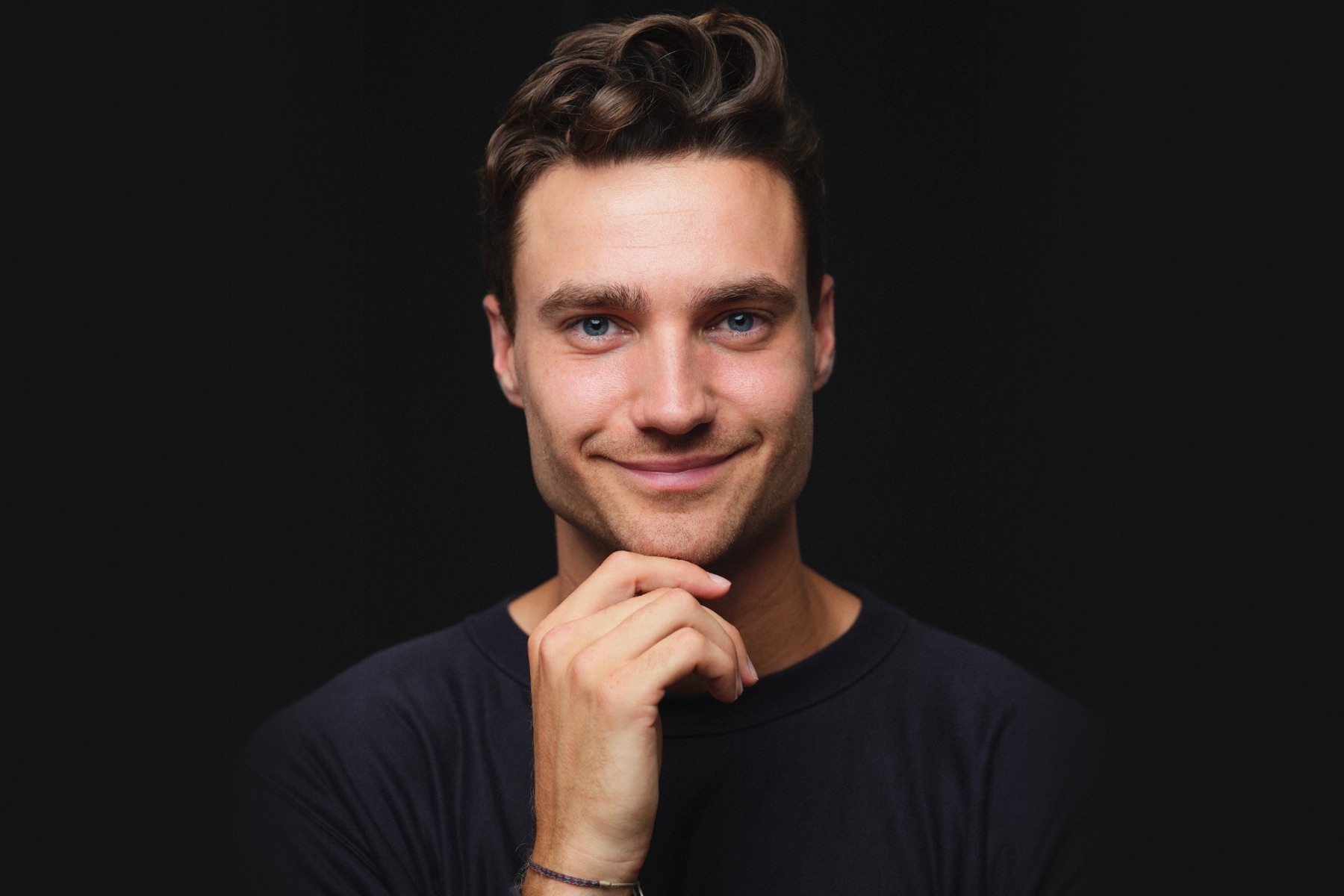
I think my love for design began long before I knew what design was.
I grew up in Germany, in a family where creativity was simply part of everyday life. My family worked in fashion, and I was surrounded by conversations about materials, colors, shapes, and the small decisions that make something feel right.
Some of my earliest memories are of visiting galleries and art fairs with my grandmother, Ilse. She was a woman with strong opinions and a wonderful appreciation for art and architecture. She had built her own architect-designed home and collected art throughout her life. I loved spending time with her, listening to her thoughts about the things we saw and learning to look a little more closely.
I didn’t always understand what I was looking at. But I remember how certain objects, rooms, and images could make me stop and feel something.
Looking back, I think that’s where my curiosity began. I wanted to understand why some things stayed with us, why certain details mattered, and how something made by another person could affect the way we felt.
Today, I collect art myself. Some of the works in my collection once belonged to her. I like to think that, in a way, I’m continuing a conversation we started many years ago.
I didn’t have a name for any of it then. I was simply paying attention.
The beginning
At seventeen, my curiosity took me to Palo Alto, California.
I had started working on Skip, a photo-sharing app, and wanted to see what it meant to build a company for real. We raised around €120,000, built a product, and tried to turn an idea into something people would use.
I was young and had a great deal to learn. Moving to California gave me the chance to meet people who were building things I had only read about, and to experience a place where even the most ambitious ideas seemed worth pursuing.
I learned an extraordinary amount, much of it through mistakes. I learned that enthusiasm isn’t a substitute for clarity, that building something is different from imagining it, and that the most valuable part of a project isn’t always the outcome.
Skip didn’t become the company I once hoped it would. But it gave me something more lasting: the confidence to follow a question, even when I couldn’t see where it would lead.
Along the way, I was accepted to Harvard University, an opportunity I was incredibly grateful for. But after a year, I realized that the things I was most excited to learn couldn’t necessarily be taught in a classroom. I wanted to be out in the world, building things, making mistakes, and learning from the people around me. So I decided to leave and follow my curiosity.
Finding my place in design
Over time, I realized that the part of building products I loved most was design.
During my time in California, I met Patrick Haede, who was working on an idea that would eventually become Mapify. We connected over a shared interest in technology, design, and the possibilities of building something new.
I joined Mapify as its first employee and lead designer. We were trying to make discovering and sharing places feel more inspiring, more intuitive, and more human. The product was featured by Apple several times and was later acquired by HomeToGo.
I still remember how exciting it was to see something we had created reach people around the world. It was one of the first times I truly understood how much influence thoughtful design could have.
Those years taught me that good design is never just about making something beautiful. It’s about understanding people. Their hopes, habits, frustrations, and the things they might not know how to ask for.
I began to see design as a way of translating that understanding into something tangible. Something useful, yes, but also something that could create a feeling.
Patrick became a close friend, and our shared interest in meeting interesting people and learning from their experiences would eventually lead us to start Quick Coffee together.
Building at scale
That curiosity eventually led me to Gorillas, where I joined as the first designer at twenty-two.
It was an intense period. We were building quickly, learning in public, and watching a small idea become a company valued at more than a billion dollars.
Working closely with the founders, I helped shape the first version of the app and the early experience of a company that was growing at an extraordinary pace.
Speed can be exhilarating, but it also tests what you believe about your craft. I learned to make decisions with incomplete information, to work across disciplines, and to protect the details that matter even when everything around you is moving fast.
Perhaps most importantly, I learned that design isn’t something a company adds at the end. At its best, it shapes how a company thinks from the beginning.
Creating Blossom
After years of helping build other people’s companies, I wanted to create something of my own again.
In 2022, I co-founded Blossom with Johanna Weber, a design studio built around a simple belief: ambitious founders deserve design partners who care as deeply about their ideas as they do.
We had the privilege of working with more than twenty-five founders and teams. Each project brought a different problem, a different perspective, and another chance to learn.
What I loved most was getting close to the people behind the companies. Understanding what they wanted to create, why it mattered to them, and how design could help bring their ideas into the world.
Building a studio also challenged me in ways design work alone never had. I had to learn about leadership, responsibility, and the difference between doing great work and building an environment where great work can happen.
Eventually, I reached a point where I needed to reconsider how I wanted to spend my time and energy. Blossom was acquired by Sonic Technologies, and I stepped away from leading the studio day to day.
That chapter taught me to take my ambitions seriously, but not to confuse them with my identity. Sometimes growth means choosing a different direction.
Investing in people
One of the most rewarding parts of my journey has been meeting people who see possibilities where others see obstacles.
Over time, I began investing in and supporting early-stage companies, including Lovable, Phia, Zauber, Eigen, and Maisa. I also spent time advising founders and teams through Creandum.
I’ve never been drawn to investing purely as a financial exercise. What interests me is the person behind the idea: what they believe, why they care, and what they’re willing to dedicate years of their life to creating.
In 2025, I became a Scout for Sequoia Capital. It felt like a natural extension of something I’ve always loved: meeting extraordinary people, listening to their ideas, and believing in what they could become, sometimes long before the rest of the world sees it.
Some of the most meaningful relationships in my life began with a conversation about an unfinished idea.
A new chapter
In 2025, I joined Lovable.
I had first become involved with the company as an investor. But the more time I spent with the founders and the team, the more I wanted to be part of what they were building.
The idea behind the company immediately resonated with me: making it possible for more people to turn their ideas into real software, without needing to know how to code.
I’ve spent much of my life working at the intersection of creativity and technology. Lovable felt like a chance to bring those worlds closer together, and to help make the act of creating accessible to many more people.
There’s something wonderfully circular about it. Years after moving to Palo Alto to build my first product, I now get to help others experience that same feeling of possibility.
I still believe the most exciting technology is the kind that gives people more room to be human.
Following my curiosity
I’ve never been particularly good at limiting myself to just one thing. And I don’t think I ever want to.
Over the years, my interests have taken me from technology to art, architecture, fashion, hospitality, and places I could never have planned for.
I’ve always been fascinated by people who care deeply about their craft. People who devote themselves to creating something extraordinary, whether it’s a product, a piece of furniture, a building, or an experience that stays with you long after it’s over.
Alongside my work at Lovable, I spend time advising and collaborating with a small circle of people and companies who share that appreciation for thoughtful design. Some of those conversations take me far beyond the world of technology. That’s exactly what I love about them.
I’m also exploring ideas of my own. One is a dream I’ve carried for some time: creating a hotel. A place where architecture, design, hospitality, and human connection come together. Together with a friend, I’ve started imagining what that might look like.
There are other experiments, too. Some small, some ambitious, and some that may never become more than a question.
I’ve come to realize that not everything needs a business case or a clearly defined purpose. Sometimes, the joy of exploring an idea is reason enough.
I don’t think curiosity is something you should ever outgrow.
Writing, speaking and sharing
Over the years, I’ve discovered how much I enjoy sharing what I learn.
I’ve had opportunities to speak at events such as Slush, TechCrunch, and Founders Forum, and to exchange ideas with founders, designers, and people who are curious about creating things.
I enjoy those conversations as much as the work itself. Hearing how someone else sees the world often changes the way I see it, too.
Together with Patrick, I started Quick Coffee, a podcast built around conversations with people whose stories and ideas interest us. It’s given us the chance to meet founders, investors, and creative people we might never otherwise have met.
Writing has become another way for me to explore my thoughts. Sometimes I write about design, sometimes about technology or entrepreneurship, and sometimes about things that are harder to categorize.
I don’t write because I have all the answers. Quite the opposite. Putting a thought into words often helps me understand what I really think.
Personal projects
Some of the things I care about most begin quietly, without a plan to turn them into a company.
One of them is Letters from Felix, a personal writing project I’ve been thinking about for a long time.
The idea is to write letters to people who have inspired me. People who have shaped the way I think, introduced me to something new, or made a difference in my life, sometimes without knowing it.
I’ve often thought about how much we carry with us from the people we meet, and how rarely we take the time to tell them.
I hope these letters become a small way of doing that. Of paying attention, expressing gratitude, and sharing some of the people and ideas that have stayed with me.
Haas Foundation
My sister Hanna has inspired me to think more deeply about what it means to create opportunities for others.
Through her experiences in East Africa, she brought perspectives into my life that were very different from the ones I encountered in technology and design.
Together with our brother Jacob, we’ve been exploring the Haas Foundation, an ambition to support people and initiatives that can make a meaningful difference.
I feel fortunate to have had the freedom to follow my interests, take risks, and find people who believed in me. I don’t take that freedom for granted.
We’re at the beginning, and there’s a great deal we still want to learn. But the intention is simple: to use what we have, and what we can build together, to help open doors for others.
What design means to me
When people ask me what design means to me, I find it surprisingly difficult to give a short answer.
I’ve come to think of design as the composition of a feeling.
Every object, space, product, or interaction creates an experience. And every detail contributes to how that experience makes someone feel.
In that sense, I sometimes think of design as being a little like a symphony. Every element has a role to play, but what matters most is how they come together.
A beautiful typeface can’t compensate for an experience that doesn’t make sense. A thoughtful interaction can be undermined by a single detail that feels out of place.
I believe the smallest details often reveal the greatest respect for the people who will use what we make.
But design also asks something of us. To listen. To question our assumptions. To notice what others might overlook. And to remain open to the possibility that there’s a better way of doing something.
Sometimes I think back to those days with my grandmother Ilse, walking through galleries without knowing why certain things moved me.
I still don’t have a perfect explanation. Perhaps that’s why I keep looking.
To be continued
I don’t know exactly what I’ll be doing ten years from now. I hope I never become too certain.
Looking back, I realize that some of the most meaningful things in my life were never part of a plan. They came from the people I met, the ideas I followed, and the moments when I decided to try something without knowing where it would lead.
What I do know is that I want to keep making things, learning from people who see the world differently, and following ideas that make me feel curious and alive.
There’s still so much I want to learn, so many people I want to meet, and so many things I dream of creating.
If you’ve made it this far, thank you for taking the time to get to know me.
I hope our paths cross someday.
To be continued,
Felix Haas
London, October 2026
Credits
Looking back, I realize how much of my story has been shaped by the people I’ve met along the way.
People who believed in me, challenged my thinking, shared their knowledge, opened doors, and inspired me to see the world differently.
Some have been part of my journey for years. Others for only a brief moment. But each has left something with me.
I wouldn’t be where I am today without their kindness and generosity.
To all of them, thank you. More than you know.